Engineering and construction projects require stainless steel wire with suitable strength, flexibility, and corrosion resistance. As an SS Wire Manufacturer for Engineering and Construction Industries, Siddhi Metal Industries provides material solutions with manufacturing support from Ahmedabad, Gujarat, India.
Understanding How Stainless Steel Wire Supports Industrial Work
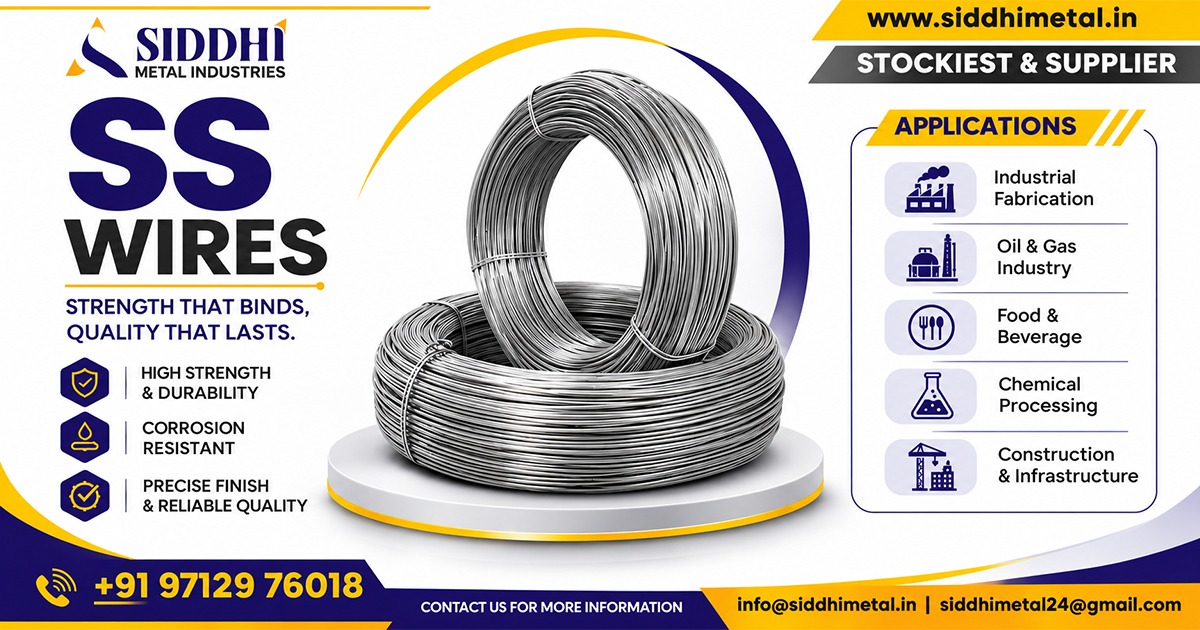
Stainless steel wire is a metal product manufactured by drawing stainless steel through dies to achieve the required diameter, surface finish, and mechanical properties. It is used in applications where strength, flexibility, corrosion resistance, and dimensional consistency are important.
In engineering and construction projects, the wrong wire selection can create problems such as premature corrosion, wire breakage, inconsistent fabrication, and difficulty during installation.
Stainless steel wire helps address these requirements by providing different material grades and physical properties for specific working conditions.
Siddhi Metal Industries offers stainless steel wire in different grades, sizes, and finishes to support industrial requirements.
Commonly available grades include:
- SS 304: Suitable for general engineering, fabrication, and construction requirements.
- SS 316: Considered for applications requiring improved resistance to chloride-related corrosion.
- SS 202: Used in selected general-purpose applications where its material properties are suitable.
- SS 310: Suitable for applications involving elevated temperatures.
- SS 410: Used where a martensitic stainless steel grade and its mechanical properties are required.
What Should Engineers Check When Selecting SS Wire?
Selecting stainless steel wire involves more than comparing prices or choosing a standard diameter. Buyers should understand the actual working requirements before finalizing an order.
The following factors help make the selection process more practical.
1. Stainless Steel Grade
Choose the material according to corrosion exposure, temperature, mechanical loading, and fabrication requirements. SS 304 and SS 316 are common choices, but their suitability depends on the operating environment.
2. Wire Diameter
The required diameter depends on the application and expected mechanical load.
Consider:
- Required wire thickness
- Load-bearing requirements
- Bending and forming requirements
- Compatibility with connecting components
- Dimensional tolerances
3. Tensile Strength
Tensile strength determines how much pulling force the wire can withstand before breaking. Buyers should specify the required strength according to the application rather than assuming every stainless steel wire has identical mechanical properties.
4. Surface Finish
Different finishing conditions are suitable for different manufacturing processes.
Common options include:
- Bright finish
- Matte finish
- Polished finish
- Annealed finish
5. Supply Form
Check whether the requirement is for wire coils, spools, or cut-length material. The supply form should match the production equipment and handling process.
6. Operating Environment
Consider moisture, chemicals, outdoor exposure, temperature, and contact with other materials before selecting the final grade.
From Raw Stainless Steel to Finished Wire: Understanding the Process
The manufacturing of stainless steel wire involves several controlled stages. Each stage influences the final diameter, surface condition, and mechanical properties.
Step 1: Raw Material Selection
The process starts with selecting suitable stainless steel material according to the required grade and application.
The chemical composition and material condition influence the wire’s performance.
Step 2: Surface Preparation
The raw material is prepared to remove surface contaminants, scale, or unwanted irregularities before further processing.
Proper preparation supports consistent wire drawing.
Step 3: Wire Drawing
The prepared material passes through specially designed drawing dies.
This process gradually reduces its diameter to the required size. Depending on the material and production requirements, intermediate heat treatment may also be necessary.
Step 4: Heat Treatment and Finishing
Annealing may be carried out to adjust ductility and improve suitability for further forming.
Step 5: Inspection and Packaging
The finished wire is checked for important characteristics such as diameter, surface condition, material identification, and applicable mechanical requirements.
Material Verification: What Buyers Should Confirm Before Ordering
For engineering and construction projects, material consistency is important because stainless steel wire may become part of a larger assembly or manufacturing process.
Before confirming an order, procurement teams should check the following points.
| Inspection parameter | What buyers should verify |
| Material grade | Confirm SS 304, SS 316, or the required grade |
| Diameter | Check nominal size and dimensional tolerance |
| Surface finish | Match the finish with the intended application |
| Tensile strength | Verify the specified mechanical properties |
| Material condition | Confirm annealed or cold-drawn condition where required |
| Surface quality | Inspect for cracks, scratches, and visible defects |
| Documentation | Request applicable test certificates and material records |
| Packaging | Check coil or spool condition and protection during transit |
Why material traceability matters
For larger projects, material identification helps procurement and quality teams connect supplied material with project specifications.
Buyers should also confirm whether the supplier can provide the required inspection documents, grade identification, and batch-related information.
Where Stainless Steel Wire Fits Into Engineering and Construction Projects
Stainless steel wire is used across several manufacturing and infrastructure activities. Its application depends on the grade, diameter, finish, and mechanical condition.
Some important areas include:
- Construction fastening: Used for selected tying, binding, and fastening requirements.
- Wire mesh production: Used in manufacturing mesh products for industrial and construction applications.
- Engineering fabrication: Suitable for components requiring wire forming and metal fabrication.
- Cable and rope manufacturing: Used in selected wire rope and cable production processes.
- Industrial filtration: Used in wire-based filtration and screening products.
- Automotive components: Applied in manufacturing selected formed wire parts and components.
- General manufacturing: Used in different industrial processes involving bending, drawing, weaving, and forming.
Project-Specific Wire Requirements and Material Planning
Different engineering projects have different material requirements. A wire suitable for indoor fabrication may not be the right choice for a coastal construction environment.
Before discussing an order, buyers should prepare a clear material requirement.
Important details include:
- Required stainless steel grade
- Wire diameter and dimensional tolerance
- Surface finish and material condition
- Required tensile strength
- Coil, spool, or cut-length preference
- Total quantity and delivery schedule
- End-use application and environmental exposure
For specialized requirements, buyers should discuss the technical specifications with the supplier before production or procurement.
This approach helps reduce material mismatches, unnecessary processing, and purchasing delays.
SERVICES
Siddhi Metal Industries supports stainless steel product requirements through the following service areas:
1. Stainless Steel Wire Requirement Consultation: Understanding application requirements, material grades, and dimensional preferences.
2. Material Selection Assistance: Helping buyers identify suitable stainless steel grades, finishes, and wire specifications.
3. Industrial Supply Coordination: Supporting material procurement according to project quantities and delivery requirements.
4. Technical and Order Support: Assisting customers with product-related queries, documentation requirements, and order coordination.
LOCATION
Stainless steel wire is relevant to engineering, infrastructure, fabrication, automotive, and manufacturing businesses across Gujarat. Industries in Ahmedabad, Surat, Vadodara, Rajkot, Gandhinagar, Bharuch, Ankleshwar, Vapi, Valsad, Morbi, Jamnagar, Bhavnagar, Junagadh, Mehsana, Kalol, Sanand, Changodar, Naroda, Vatva, Savli, Halol, Dahej, Kutch, Mundra, and Kadi require suitable stainless steel materials for different industrial and construction activities.
How Siddhi Metal Industries Supports Stainless Steel Wire Requirements
Choosing a suitable supplier involves understanding material requirements, product availability, technical specifications, and delivery expectations.
Siddhi Metal Industries is engaged in manufacturing and supplying stainless steel and mild steel industrial products, including SS rods and wires. The company offers different stainless steel grades, sizes, and finishes for engineering and industrial applications.
Siddhi Metal Industries+1
Customers can discuss their requirements based on:
- Required stainless steel grade and wire dimensions.
- Application-specific material selection.
- Surface finish and mechanical requirements.
- Quantity and project-related supply planning.
With manufacturing support from Ahmedabad, Gujarat, India, Siddhi Metal Industries works with customers looking for stainless steel material solutions for different industrial requirements.
Visit the official website: Siddhi Metal Industries to explore the company’s product range and submit an inquiry.
Frequently Asked Questions
Q1: Which stainless steel grade is commonly used for engineering wire applications?
A: SS 304 is commonly considered for general engineering and fabrication applications. SS 316 may be more suitable where additional resistance to chloride-related corrosion is required.
Q2: How do I select the correct stainless steel wire diameter?
A: Consider the required load, bending conditions, fabrication process, and dimensional requirements. Confirm the specified diameter and tolerance before placing an order.
Q3: Can stainless steel wire be used for outdoor construction projects?
A: Yes, suitable stainless steel wire grades can be used in selected outdoor applications. The grade should be chosen according to moisture, pollution, chemical exposure, and environmental conditions.
Q4: What information should I provide when requesting a stainless steel wire quotation?
A: Share the required grade, diameter, finish, tensile strength, supply form, quantity, and application details. This helps the supplier understand the requirement and prepare an appropriate quotation.
Conclusion
Selecting the right stainless steel wire requires attention to material grade, diameter, tensile strength, surface finish, and working conditions. Engineering and construction buyers in Gujarat can discuss their requirements with Siddhi Metal Industries for suitable material selection and supply coordination, with manufacturing support from Ahmedabad, India.
Looking for stainless steel wire for your next engineering or construction project? Contact Siddhi Metal Industries to discuss your material specifications, product requirements, and supply needs.
Call Us:
+91 97129 76018
Mail Us:
info@siddhimetal.in
siddhimetal24@gmail.com